
“AI will be the best or worst thing ever for humanity.” – Elon musk
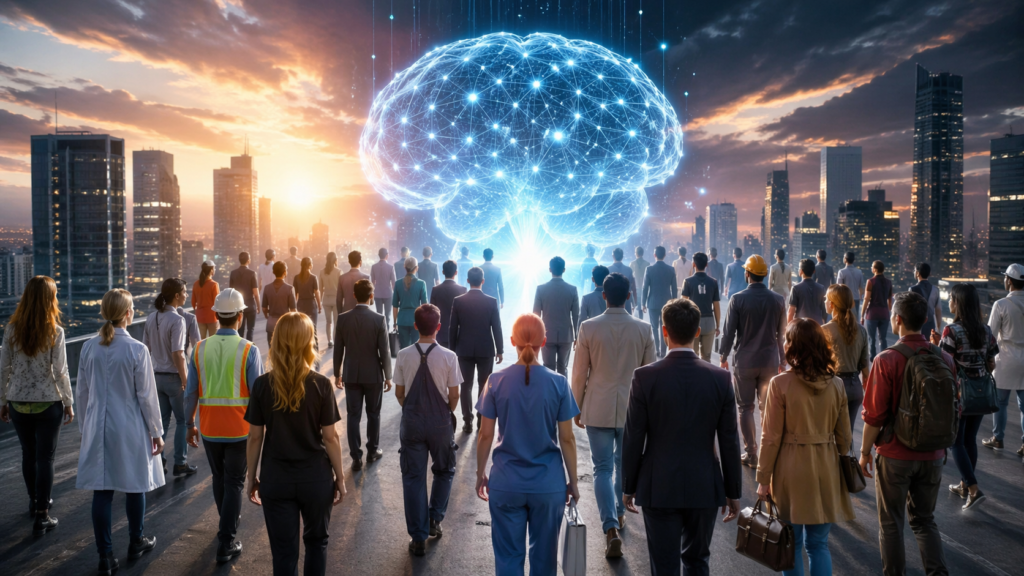
Artificial Intelligence is no longer something futuristic—it’s already part of your daily life, often without you noticing it. When your phone suggests the next word while typing, when maps show the fastest route avoiding traffic, or when apps recommend videos, products, or music based on your interests—that’s AI working in the background. It helps students learn faster through personalized study apps, assists businesses in understanding customers better, and even supports doctors in detecting diseases earlier. Just like computers and the internet became basic skills over time, understanding AI is becoming essential to stay relevant, make smarter decisions, and create new opportunities in any field.
Learning AI is becoming one of the most important skills of our time because it is no longer limited to tech companies or scientists—it is slowly shaping almost every field, from education, business, healthcare, marketing, design, agriculture, and even daily decision-making. In the coming years, AI will not just be a tool; it will become a part of how work is done, how problems are solved, and how opportunities are created. The people who learn AI early will have a clear advantage because they will know how to use it to save time, improve productivity, make smarter decisions, and create new ideas faster than others. On the other hand, people who ignore AI may find it harder to compete, not necessarily because AI will completely replace them, but because others who use AI will work faster, smarter, and more efficiently. Many people are afraid of AI because they see it as a threat to jobs, privacy, and human creativity, and this fear is understandable when technology changes quickly. However, the real issue is not whether AI will take jobs, but which jobs will change and how people will adapt to those changes. Repetitive, routine, and predictable tasks are more likely to be automated, while roles that require creativity, judgment, emotional intelligence, leadership, communication, and ethical thinking will remain deeply human. This means AI is not only a challenge but also an opportunity: those who learn it can use it to grow, innovate, and stay relevant in the future, while those who do not may struggle to keep up in a world where AI knowledge becomes as basic as computer literacy once was. In a blog post, this topic can also cover the fear of change, the balance between human skills and machine intelligence, the need for reskilling, the future of work, and the idea that AI should be seen not as a replacement for humans but as a powerful partner that can amplify human potential.